

PORTUGAL
Portugal is one of the world’s top travel destinations, from beaches, to breath-taking mountains, rolling plains and forests to the steep slopes descending toward the river Douro. Portugal boasts an impressive number of native grape varieties that exist nowhere else.
Portuguese winemakers have mastered the art of blending, creating wines that are perfect expressions of where they are from. The country boasts some of the world’s oldest vines, and are experts at sustainability and biodiversity, the heritage and integrity of the grapes.
We are honored to import these wineries into the US


Located 60 kilometers, north of Lisbon, on the left bank of the Tejo (Tagus) river, the Herdade de Muge| Casa Cadaval Estate, owned by Álvares Pereira de Melo family, has an inheritance of four centuries of history, established Since 1648. In the beginning of the 17th century, the property, then owned by the family of the counts of Odemira, came under the domain of the Casa Cadaval, when her daughter, Dona Maria de Faro, Countess of Odemira, married D. Nuno Álvares Pereira de Melo, 1st Duke of Cadaval. The Casa Cadaval has today a property with 5000 hectares and is managed, as it was in the last 4 consecutive generations, by a woman, Teresa Schönborn, Countess of Schönborn and Wiesentheid, Chairman of the board of Casa Cadaval Estate. The vineyards at Casa Cadaval are located in the Charneca sub-region, characterized for the sandy soils, which originate from the Tejo river and Atlantic sea (Delta). The sandy soils stress the vines resulting in low yields (between 3 and 6 tons per hectare well below the average of the region) resulting in complex and very concentrated wines.


The moderate climate and difference in day and nighttime temperatures contribute to the freshness, fruitiness, minerality and elegance of the wines. The vineyards currently occupy an area of about 45 hectares, with 37 hectares of red varieties (Touriga Nacional, Trincadeira, Aragonez, Alfrocheiro, Alicante Bouschet, Cabernet Sauvignon, Merlot & Pinot Noir) and 8 hectares of white varieties (Arinto, Gouveio, Fernão Pires, Alvarinho, Sauvignon blanc, Riesling and Viognier). Environmental concerns are a constant and led to the adoption of sustainable program.


This family owned farm located at parallel 39 North Casal da Coelheira benefits from a mediterranean climate with long extreme summers, and cold wet winters, and the Tagus river influence (both in soil type & deposits and climate). The sandy soils retain small quantities of water which stresses the vines and produces less leaf and more concentrated fruit. The resulting wines show the amazing terroir of the area. Now, in 2022 with 64 hectares, the vineyard has older vines up to 36 years, and newer vines planted during the 2009 winter. With mainly sandy areas, grape varieties were chosen very carefully to fit the soil type and climate.


Casal da Coelheira wines are produced exclusively from estate grown fruit. Third generation winemaker Nuno Falcão Rodrigues’ aim is to produce consistently high quality wines from our vineyards, offering the best compromise between quality and price.


Owned by the Fortunato family, Quinta da Devesa is a small 34 hectare winery in the Cima Corgo sub region of the Douro Valley, overlooking the confluence of the rivers Douro and Corgo. The winery has been dedicated to the production of Douro and Port wine since 1941. Tawny Ports, both red and white, are the winery's specialty. The vineyards range in elevation from 500 to 600 meters, part south-facing, with excellent sun exposure, and part north-facing where it receives cooler prevailing winds. This diversity of sun and wind exposure causes varying levels of maturation and development that allow harvesting under optimal conditions.
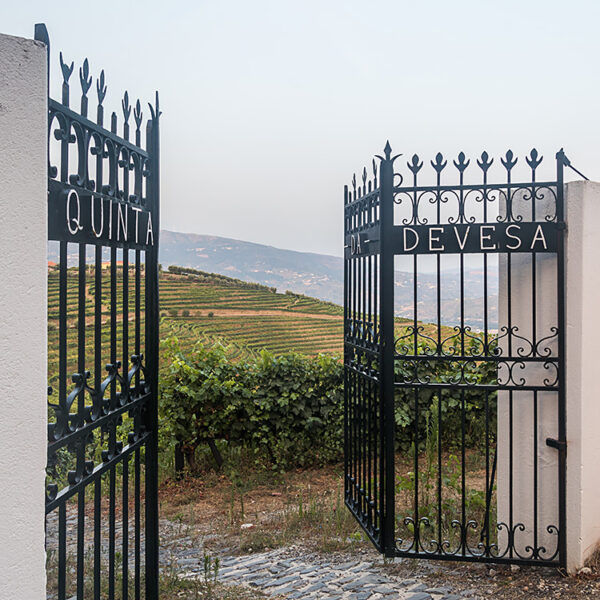


The vineyards are managed under a minimum intervention system known as “Integrated Production,” focusing on prevention and providing a healthy habitat for birds, reptiles and mammals, ensuring adequate biodiversity and a balanced, sustainable environment.


Vinho Verde, in north-western Portugal, is a region of rivers and mountains, valleys and plains.Granite soils influence both the vines and the architecture in the region. Quinta da Lixa is a modern, state of the art facility, with winemaker Carlos Teixera at the helm. Beyond making wines that express its exceptional terroir, Quinta da Lixa prioritizes conservation and eco-stewardship. The entire vineyard area, 105 hectares, is managed via an Integrated Production System. Natural methods are also preferred in the cellar, for example using gravity for the passage of wine (rather than electricity).


Quinta da Lixa strives to lay a foundation for grape growing and winemaking for the future. The Monverde hotel allows guests to experience Quinta da Lixa’s wines and expansive vineyard views, Portuguese art and cuisine. “We are happy to share our dreams, Saude!” Oscar Meireles, CEO


This special region, known as “Douro Verde” offers the best both regions have to offer; granitic soils, river and mountain influences, and lots of sunlight. Quinta de Ferro strives to highlight its unique terrier by making wines as naturally as possible. By utilizing an Integrated Production system (preventative practices rather than spraying) Quinta do Ferro produces its still and sparkling wines sustainably and as naturally as possible.


It is the first winery in Vinho Verde to release sparkling wines, and one of only a few to produce a red sparkler.